 |
EXERCISE: Through wood and thicket, tips for day hikers
Hiking is a sport, one where fitness and planning play an integral role.
Local Hiking Trails
By Blair Koster
Fall is almost here, a season of stunning foliage: scarlet, gold, and burnt orange. Trails and roads beckon. There are numerous parks and hiking trails, all within 50 miles or less of Richmond. Here are my top five picks:
Bear Creek State Park
929 Oak Hill Road
Cumberland, VA 23040
www.dcr.virginia.gov/state_parks
Just 35 miles west of Richmond in Cumberland State Forest, the park has blazed trails with oak hickory forests, sweet gum and Loblolly pine. The park is habitat to wild turkey, bobcats, and white-tailed deer.
Maymont Park
1700 Hampton St.
Richmond, VA 23220
(804) 358-7166
100-acre landscape with rolling hills, giant trees, gardens, a children's farm and 40-acre wildlife area with bison, elk, foxes, deer and more.
James River Park System
Pony Pasture Rapids
7200 Riverside Drive
Richmond, VA 23225
On the south bank two miles downstream from the Huguenot Bridge, the winding trails have a brilliant mosaic of leaves in the fall, and there is a panoramic view of the river.
Pocahontas State Park
10301 State Park Road
Chesterfield, VA 23832-6355
(804) 796-4255
www.dcr.virginia.gov/state_parks
Just 20 miles from downtown Richmond, it is one of the more popular state parks. Swift Creek is in the center of the park, and there are numerous trails in surrounding woodland. Also has a trail for people with disabilities.
R. Garland Dodd Park
at Point of Rocks
201 Enon Church Road
Chester, VA 23831
(804) 530-2459
About 30 minutes from downtown Richmond, this park was an Indian village, a port, and a Civil War battlefield. There are many trails and a marsh walk; the marsh is habitat to warblers, red-wing blackbirds, and raptors. Fall foliage is extraordinary with red and gold leaves shimmering in the water.
To view more trails and parks in or near the Richmond area, go to the Richmond Times-Dispatch's Discover Richmond Web site: discoverrichmond.com. There are trails and hidden wonders in and outside the city; they just need to be discovered. |
(MS) - Whether spring, summer, fall or winter, nature lovers have always enjoyed hiking. It is a great way to exercise and see the outdoors, and almost anyone anywhere can enjoy hiking.
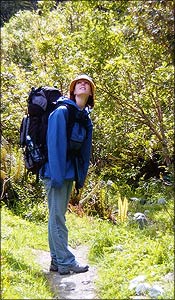 While its appeal is almost universal, hiking is a sport, one where fitness and planning play an integral role. Those considering a hiking trip should know that even a casual hike requires planning: While its appeal is almost universal, hiking is a sport, one where fitness and planning play an integral role. Those considering a hiking trip should know that even a casual hike requires planning:
» PREPARE. Even on a sunny, warm afternoon, be prepared. Sudden changes in weather, getting lost and injury are just a few things that can happen on a hike. Weather shelters, maps or water may not be available. Pack essentials. Bring a cell phone. Carry a compass and know how it works. Many lost hikers have had compasses they didn't know how to use. Pack a rain poncho and bring warm clothes of fleece, synthetics or wool, regardless of the temperature. If the temperature drops, or you get wet, you need to stay warm. Do not wear cotton, since cotton stays wet, and staying wet can lead to hypothermia, even in summer. Bring 1 quart of water for each mile you will hike. Wear hiking boots or trail shoes. Don't forget food, maps, moleskin for blisters, sunscreen, and toilet paper.
» KNOW YOUR ABILITIES. Hiking can make the unconditioned miserable. People in poor physical shape need not avoid hiking altogether, but they should stick to easy trails close to civilization.
» HIKE WITH A PARTNER. Hiking alone can be dangerous, even lethal. What if you become injured and unable to walk? In remote areas, hike in a group of at least four. This way, if one person is injured, two can find help while one stays behind. Three people would be more risky, since the person going for help could get lost and have no way to communicate. Aaron Ralston's story is a firm reminder of the dangers of hiking alone. A young American mountain climber, Ralston ventured alone into the Utah canyons. His right arm pinned by a boulder, Ralston eventually had to amputate his arm with a dull knife to survive. While the tale is courageous, it illustrates the importance of hiking with a companion.
» TELL PEOPLE YOUR DESTINATION. As a safety precaution, anyone planning a hiking trip should tell someone where they are hiking and roughly how long it should take. Call at a designated time to let that person know you are okay. Instruct that friend or loved one to alert local authorities that you might be lost or hurt if you don't call when scheduled.
|
|
|
|
 Good Health