 |
SUN PROTECTION: Sun Smart
By Blair Koster
Anthelios SX sunscreen with Mexoryl™ SX. Available at Dr. Michael Godin's office. |
With sunshine and warm days, people are pulling back their curtains and opening windows. Warm wind, foaming surf and vacation days in the sun beckon. This summer, get sun smart. Know the facts and protect yourself.
The sun emits three kinds of ultraviolet rays: UVA, UVB, and UVC. The ozone layer protects us from UVC rays. For years, scientists have only been concerned with UVB rays, the visible rays which cause skin to burn or tan.
Experts have concluded that UVA is just as dangerous as UVB, perhaps more so. UVA is outside our visible spectrum and causes deep skin damage that we cannot see. This sun exposure causes wrinkles, brown spots, leathering, sagging and skin cancers.
UV is an officially recognized carcinogen, or cancer-causing agent.
- More than 1 million new cases of skin cancer will be diagnosed in the United States this year.
- An estimated 9,800 people will die of skin cancer this year, 7,800 from melanoma and 2,000 from other skin cancers.
SPF Q&A
Dr. Galen Fisher, MD, Mohs, and Dr. Joi Lenczowski, MD, discuss sunscreens.
» Dr. Joi Lenczowski
 Joi Lenczowski, MD, is a dermatologist at Dermatology Associates, 7111 Jahnke Road in Richmond, VA. (804) 320-1102. Joi Lenczowski, MD, is a dermatologist at Dermatology Associates, 7111 Jahnke Road in Richmond, VA. (804) 320-1102. |
What can you tell me about sunscreens?
Sunscreens protect against sunburn (UVB rays) and generally provide little protection against UVA rays. Sunscreens come in two forms: Chemical sunscreens contain chemicals, such as benzophenone or oxybenzone that absorb UVA rays.
Physical sunscreens contain inert minerals such as titanium dioxide, zinc oxide or talc, reflecting UVA and UVB rays away from skin.
What are the advantages and disadvantages of chemical-based sunscreens?
They offer excellent UV protection. They don’t leave a layer on the skin, and they are more easily absorbed by the skin. Many provide both UVA and UVB protection.
However, they can irritate sensitive skin, clog pores, and react with light to heat skin.
Tell me about the advantages/disadvantages of physical sunscreens.
Physical sunscreens contain titanium and zinc oxide. They don’t degrade in the sun, and they reflect light. They’re great for those with sun sensitivity, those who are prone to sun poisoning and those with lupus. These sunscreens are a great physical blocker from the sun. Chemical-free sunscreens are good to use on the face. The only problem? A whitish gray haze on the skin.
Do you need sunscreen for incidental activity like driving or taking a walk?
Yes. Use a facial moisturizer on your ears, neck and the backs of your hands. Oil of Olay and Neutrogena SPF 30 have very light moisturizers.
Do people need sun protection for their hair?
No, not if they have plenty of
natural hair. Hair is keratin, like nails. A cosmetic change, maybe a lightening of color, can occur but no breakdown in hair structure. Color-treated or permed hair is more porous and can break down with continued sun exposure. |
|
» Dr. Galen Fisher
 Galen Fisher, MD, Mohs, Laser and Cosmetic Surgeon, practices at Commonwealth Dermatology, 6603 West Broad St. in Richmond, VA. (804) 282-0831. Galen Fisher, MD, Mohs, Laser and Cosmetic Surgeon, practices at Commonwealth Dermatology, 6603 West Broad St. in Richmond, VA. (804) 282-0831. |
What is SPF, and what does it mean?
SPF means sun protection factor. It is the amount of UVB protection the sunscreen provides; it doesn’t apply to UVA protection, so a high SPF does not guarantee UVA protection. The rating (SPF 30, etc.) indicates how long someone can be in the sun before burning, compared to wearing no sunscreen. If you can stay in the sun 10 minutes without sunscreen before burning, multiply that number by the rating.
Which sunscreen would you recommend for normal, daily use?
Neutrogena. It’s chemical-free, SPF of 30 and can be worn under makeup. Blue Lizard is good for sensitive skin. C.O.T.Z. is great, and you can purchase it online. It’s waterproof, protecting skin from UVA and UVB rays. Anthelios SX is the new gold standard, protecting against both UVB and UVA rays. Look for La Roche
Posay Anthelios SX in area doctors’ offices.
Which sunscreen is best for children?
Blue Lizard Sport, SPF 30 plus, exclusively. It’s very water-resistant, good for sensitive skin, and provides both UVA and UVB protection. I use it on my own kids.
Which sunscreen would you recommend for people with oily skin?
I’d use the spray-on, alcohol-based sunscreens. Choose the brand with UVA and UVB protection. That’s important. An SPF of 30 is appropriate. Go any higher, and you’re not getting additional protection. An SPF of 15 is not high enough.
Do you have any additional tips for people?
Remember to put sunscreen on your hair part-line. Three to four times a week, I see people with cancer down their part-line: women almost more than men. Many men who don’t have much hair use sunscreen, but women just don’t think about it. Use regular sunscreen on your nose, and don’t forget your lips. I would use Chap Stick® with titanium and zinc. I see squamous cell carcinoma, a common form of skin cancer, on the lower part of the lip. Don’t forget sunglasses to protect your eyes. Wear sunscreen that protects against UVA and UVB. |
|
Sun-proof your world
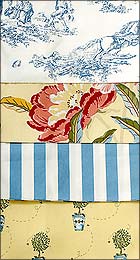 |
| Sunbrella, upholstery fabrics that provide up to 98% UV protection. Find them locally at Calico Corners. |
Now that you've taken care of yourself, don't forget about your furniture. Direct sunlight damages cottons, linens and silks. Why not use a trendy, stylish and durable upholstery fabric that doesn't fade?
SUNBRELLA FABRIC fills the bill, and Calico Corners, 8906 W. Broad St. in Richmond, sells it. "Sunbrella furniture fabrics have been tested and proven to provide up to 98 percent UV protection. They have been awarded the Seal of Recommendation by the Skin Cancer Foundation," says Tonya Jordan-Pharr, Calico Corners' manager. Sunbrella fabrics are also used on boat awnings and convertibles. They can be cleaned with bleach. Calico Corners has a Mason jar of bleach with Sunbrella fabric in it. The fabric looks new, but the bleach is eating away at the jar. The bleach and fabric have been in the jar for four years. Now that's durability.
SOLAR FILM. John Chewning, owner of Solar Film at 7921 W. Broad St. in Richmond, says, "Solar film is the equivalent of putting SPF 600 on your house." It protects furniture, greatly reducing fading, glare and excessive heat transfer through windows. It keeps homes cool in the summer and warm in the winter. "The U.S. government just approved a tax credit," says Chewning. "Homeowners can get up to a $500 deduction. Solar film is not just for the affluent. It's an affordable product; a normal window is $65 installed top to bottom." Solar film is approved by Energy Star and enhances the ability to see outside. |
|
| Sun-proof your wardrobe |
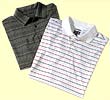 Men's Nike golf shirt. UPF 30+ UV protection. Dri-Fit fabric, $60. Men's ClimaCool® golf shirt from Adidas.UPF 15+ UV protection. Coolmax® fabric, $65. Both from Dick's Sporting Goods. Men's Nike golf shirt. UPF 30+ UV protection. Dri-Fit fabric, $60. Men's ClimaCool® golf shirt from Adidas.UPF 15+ UV protection. Coolmax® fabric, $65. Both from Dick's Sporting Goods.
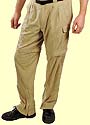 Men's Amphi™ convertible pants from Ex Officio. Zip-off leg converts pants to shorts. UPF 30+ Sun Guard Nylon with DuPont™ Teflon finish, $69 from Orvis. Also available: Women's Titanium™Challenger™ II convertible pants fromColumbia Sportswear Company®.Zip-off pants converts to shorts. UPF 30 UV protection.Nylon, $39.99 from Dick's Sporting Goods. Men's Amphi™ convertible pants from Ex Officio. Zip-off leg converts pants to shorts. UPF 30+ Sun Guard Nylon with DuPont™ Teflon finish, $69 from Orvis. Also available: Women's Titanium™Challenger™ II convertible pants fromColumbia Sportswear Company®.Zip-off pants converts to shorts. UPF 30 UV protection.Nylon, $39.99 from Dick's Sporting Goods.
|
 BUZZ OFF NYCOTT™ Sun Bucket hat from Ex Officio.Treated with BUZZ OFF Insect Shield to repel mosquitoes, ticks, ants, flies, chiggers and midges. UPF 30+ sun protection. Nylon, $24 from Orvis. BUZZ OFF NYCOTT™ Sun Bucket hat from Ex Officio.Treated with BUZZ OFF Insect Shield to repel mosquitoes, ticks, ants, flies, chiggers and midges. UPF 30+ sun protection. Nylon, $24 from Orvis.
 Men's Patagonia Sunshade shirt. UPF 30+ UV protection. Polyester, $49 from Orvis. Men's Patagonia Sunshade shirt. UPF 30+ UV protection. Polyester, $49 from Orvis.
 Men's Orvis Open Air casting shirt. UPF 30+ sun protection. Brushed polyester/nylon blend, $69 from Orvis. Men's Orvis Open Air casting shirt. UPF 30+ sun protection. Brushed polyester/nylon blend, $69 from Orvis.
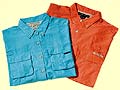 Air Strip™ Lite shirts from Ex Officio. UPF 30+ sun protection, nylon/polyester blend. Women's shirt in turquoise, $79. Men's shirt in melon, $85 Both from Orvis. Air Strip™ Lite shirts from Ex Officio. UPF 30+ sun protection, nylon/polyester blend. Women's shirt in turquoise, $79. Men's shirt in melon, $85 Both from Orvis.
|
|
|
|
|
 Good Health